Fort Wayne sits atop complex glacial deposits left by the Erie Lobe of the Wisconsin glaciation. This geology produced widespread fine-grained soils—silts and clays—that dominate shallow foundations across Allen County. ASTM D4318 liquid limit and plastic limit testing is how we quantify their behavior. The plasticity index tells an engineer what happens when moisture rises during spring thaw or heavy rain. A soil that seems stable in August can lose half its bearing capacity by November. For any project east of the St. Joseph River flood control system, we recommend pairing Atterberg analysis with grain-size distribution to map the full gradation curve before designing footings or retaining walls.
The real value of Atterberg limits is not the number itself—it is predicting volume change potential before the foundation is poured.
Our approach and scope
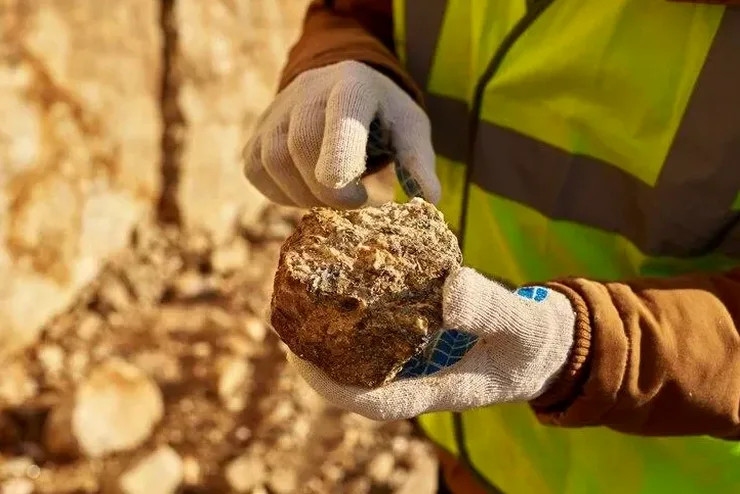
Local geotechnical context
The freeze-thaw cycle in northeast Indiana is brutal on cohesive soils. Fort Wayne averages 90 freeze-thaw days per winter. When a high-plasticity clay absorbs water and freezes, ice lenses lift the soil; when it thaws, the structure collapses and bearing capacity drops sharply. Atterberg limits identify these susceptible soils before construction. A PI above 25 signals significant heave potential under the IBC frost depth requirement of 30 inches. We have seen projects near the Maumee River floodplain where ignoring a CH soil classification led to pavement cracking within two seasons. The liquid limit test is not just a lab exercise—it is a direct predictor of long-term performance under Fort Wayne's climate.
Reference standards
ASTM D4318-17e1 defines standard test methods for determining liquid limit, plastic limit, and plasticity index of soils; ASTM D2487-17 establishes standard practice for soil classification using the Unified Soil Classification System for engineering purposes; and the 2021 International Building Code, as adopted by Indiana, specifies foundation investigation requirements in Section 1803.
Complementary services
Liquid & Plastic Limit Determination
Complete ASTM D4318 test with multipoint liquid limit flow curve and plastic limit thread rolling. Delivered with USCS classification and PI calculation.
Shrinkage Limit Testing
ASTM D4943 wax method for determining the shrinkage limit of fine-grained soils. Useful for assessing volume change in clay liners and compacted fill.
Soil Index Property Package
Combined Atterberg limits, natural moisture content, and grain-size analysis (sieve + hydrometer) for a full USCS classification from one sample.
Typical parameters
Quick answers
What do Atterberg limits actually measure in a soil?
They define the moisture contents at which a fine-grained soil transitions between solid, semi-solid, plastic, and liquid states. The liquid limit is the boundary between plastic and liquid behavior. The plastic limit is the boundary between semi-solid and plastic. The plasticity index (PI = LL - PL) quantifies the moisture range over which the soil behaves plastically.
How much Atterberg limits testing costs in Fort Wayne?
How long does it take to get results?
Standard turnaround is 2 to 3 business days. Rush processing is available for an additional fee when project schedules demand same-day or next-day classification.
What soil types require Atterberg limits testing?
Any fine-grained soil with more than 50% passing the No. 200 sieve (75 microns). Silts and clays are primary candidates. Clean sands and gravels do not exhibit plasticity and are not tested.
How does the Unified Soil Classification System use plasticity data?
PI and LL position the soil on the Casagrande plasticity chart (ASTM D2487). The chart divides clays (above the A-line, symbol C) from silts (below, symbol M) and further separates low (L) from high (H) plasticity. For example, a soil with LL=35% and PI=18% plots as low-plasticity clay (CL).