Fort Wayne sits on a complex mix of glacial deposits. The Maumee River and its tributaries carved valleys now filled with loose alluvial and outwash sands. These soils often lack the density needed for heavy structures. Standard fill compaction rarely reaches deep enough. Vibrocompaction design provides a direct solution. It densifies granular soils to depths of 15 meters or more. A proper design accounts for the city's seasonal groundwater shifts, which rise sharply in spring. Our approach integrates in-situ permeability data to anticipate drainage during compaction. We also cross-check designs with CPT soundings for precise stratification before any vibroflot is deployed. The goal is uniform density. No soft spots. No differential settlement later.
Glacial outwash channels under Fort Wayne demand vibration energy calibrated to grain size, not just a standard grid.
Our approach and scope
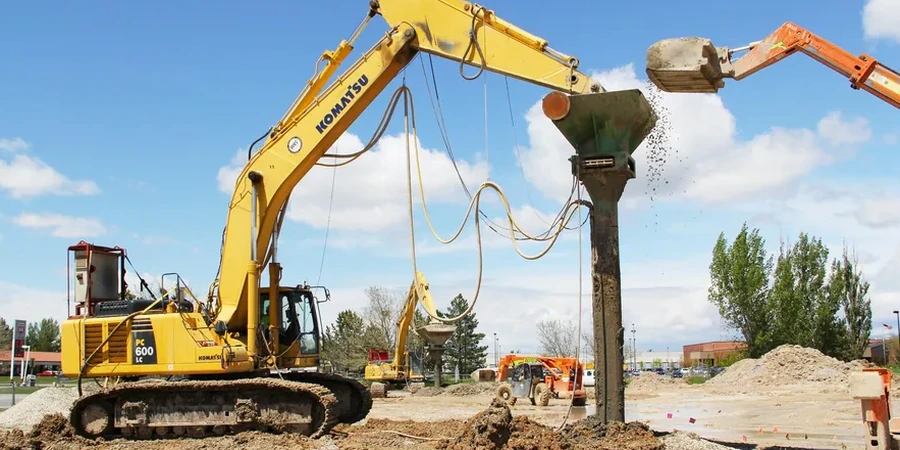
Local geotechnical context
IBC Chapter 18 and ASCE 7 require ground improvement designs to be verified. In Fort Wayne, the risk of skipping this step is amplified by the loose outwash sands near the Maumee River corridor. These soils are prone to settlement under cyclic loading and can background strength loss if saturated. Liquefaction potential exists in isolated pockets, especially east of downtown where the water table sits within 2 meters of the surface. A vibrocompaction design without post-treatment verification leaves the site vulnerable. We pair every design with a liquefaction assessment when the project falls in a moderate seismic zone. Settlement tolerances are tight for industrial floors and bridge approaches. Our designs target a maximum post-construction settlement of 12 mm, verified by load tests or CPT before structural work begins.
Reference standards
ASTM D1586-18, ASTM D2487-17, ASCE 7-22, IBC 2021 Chapter 18
Complementary services
Feasibility and Treatability Study
We run grain-size analyses and trial SPT soundings to confirm that vibrocompaction suits the site. Fines content, depth to water, and lateral variability define the treatment limits.
Grid Design and Energy Calibration
Spacing, probe diameter, vibration frequency, and dwell time are specified for each soil zone. We deliver a complete production plan ready for the compaction crew.
Post-Treatment Verification
CPT or SPT testing on a tight grid after compaction. We compare before-and-after density profiles and issue a stamped report confirming compliance with IBC and project specifications.
Typical parameters
Quick answers
What soil types in Fort Wayne are suitable for vibrocompaction?
Clean sands and gravels with less than 12 percent fines work best. Much of the loose material in the Maumee outwash channels meets this criterion. Silty deposits or clays require a different method, typically stone columns.
How much does a vibrocompaction design cost for a typical Fort Wayne site?
How do you verify the compaction was successful?
We run CPT or SPT soundings at selected points after the vibroflot passes. The before-and-after blow count or tip resistance must show a clear increase. A final report documents the achieved relative density.
Does the high spring water table in Fort Wayne affect the process?
Yes. A shallow water table reduces effective stress, so the vibroflot must overcome lower confining pressure. Our design adjusts dwell time and probe depth to compensate for seasonal saturation in the Maumee basin.