Foundations serve as the critical interface between any structure and the ground beneath it, transferring loads safely from the building to the soil or rock. In Fort Wayne, the importance of proper foundation design cannot be overstated, given the region's unique subsurface conditions and climate. From residential basements to large commercial developments, the performance of a foundation determines the long-term stability, safety, and durability of the entire project. Local engineers and contractors must account for a variety of factors, including soil bearing capacity, frost depth, and groundwater levels, to deliver solutions that stand the test of time.
Fort Wayne sits within a glaciated landscape, characterized by a complex layering of glacial till, outwash sands, gravels, and lacustrine clays. These deposits, left by the retreat of the Wisconsinan ice sheet, create highly variable ground conditions across the city. In many areas, near-surface soils consist of stiff to hard silty clay till, which can supply good bearing capacity. However, pockets of softer alluvial and lacustrine deposits along the St. Marys and Maumee river corridors present significant challenges, often requiring specialized approaches such as pile foundation design to reach competent strata. Seasonal frost penetration, typically reaching depths of 36 to 42 inches, also mandates careful footing placement to prevent heave.
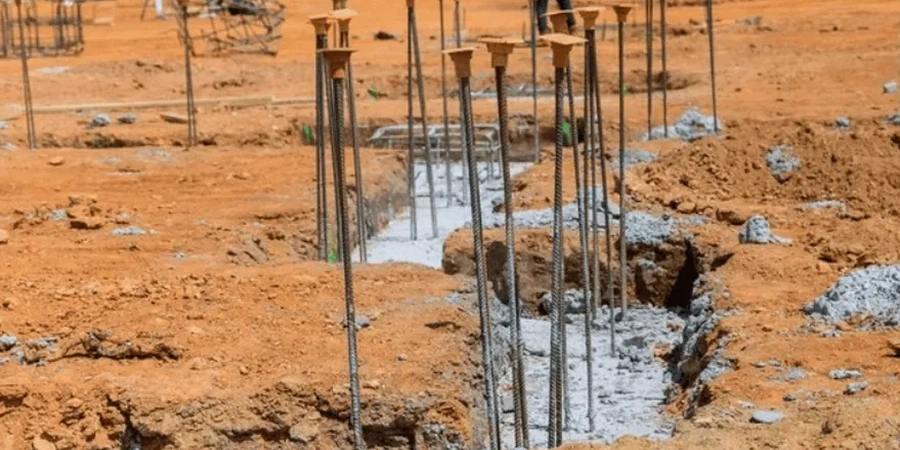
Foundation design and construction in Fort Wayne are governed by the Indiana Residential Code and the Indiana Building Code, which adopt the International Building Code (IBC) and International Residential Code (IRC) with state-specific amendments. These regulations set minimum standards for footing dimensions, reinforcement, concrete strength, and embedment depths based on local frost lines and soil conditions. Compliance with these codes is enforced through local building permits and inspections, ensuring that all new construction meets the required safety thresholds. For engineered structures, a geotechnical investigation is typically mandated to inform the foundation design parameters, as outlined in IBC Chapter 18.
The types of projects requiring robust foundation solutions in Fort Wayne are diverse. Single-family homes commonly use cast-in-place concrete basement walls or crawl space footings, while multi-story commercial buildings in the downtown area often demand deep foundation systems to support heavier loads on marginal soils. Industrial facilities, bridges, and retaining walls along the riverfront also present unique geotechnical demands. Regardless of the scale, early engagement with a geotechnical specialist is essential to identify the most suitable foundation type, whether it involves shallow spread footings, mat foundations, or deeper elements like driven piles or drilled shafts, ensuring the project's success from the ground down.
Available services
Quick answers
What are the most common types of foundations used in Fort Wayne?
The most common foundation types in Fort Wayne include shallow foundations such as cast-in-place concrete strip footings, spread footings, and mat foundations for areas with competent glacial till. In zones with weaker soils or for heavier structures, deep foundations like driven steel H-piles or drilled concrete shafts are frequently used to bypass unsuitable near-surface materials and bear on deeper, more competent strata.
How does the local soil geology in Fort Wayne affect foundation design?
Fort Wayne's geology is dominated by glacial deposits of variable composition and density. The presence of stiff clay till generally provides good support, but lenses of soft clay, silt, and saturated sand can lead to differential settlement. This variability necessitates thorough geotechnical investigations to characterize subsurface conditions and select appropriate foundation types and bearing depths.
What is the required frost depth for footings in Fort Wayne?
The Indiana Building Code mandates a minimum footing depth of 36 to 42 inches below finished grade in the Fort Wayne area to protect against frost heave. The exact depth can vary based on local jurisdiction requirements and specific site conditions, including soil type and groundwater, and should always be confirmed with the local building department before construction.
When is a deep foundation, like piles, necessary instead of a shallow foundation?
A deep foundation becomes necessary when shallow soils lack sufficient bearing capacity or when excessive settlement is anticipated. This often occurs in areas with thick deposits of soft clay, fill, or organics, common near Fort Wayne's river corridors. It is also required for structures with heavy concentrated loads or where uplift and lateral forces from wind or water must be resisted.