Geotechnical laboratory testing forms the analytical backbone of any construction or infrastructure project in Fort Wayne, transforming field samples into precise engineering parameters. This category encompasses the systematic evaluation of soil and rock properties through standardized procedures that measure physical, mechanical, and chemical characteristics. From grain size distribution to plasticity indices, laboratory work validates site investigation findings and provides the quantitative data engineers need for foundation design, slope stability analysis, and earthwork specifications. In Fort Wayne's active development landscape—where commercial expansions, residential subdivisions, and public works projects intersect with complex glacial geology—reliable lab results are not optional; they are fundamental to risk management and regulatory compliance.
Fort Wayne sits atop a layered sequence of glacial deposits left by the Wisconsinan ice advance, creating a subsurface profile dominated by tills, outwash sands, lacustrine silts, and occasional organic zones within the Maumee River valley. These soils exhibit considerable variability in composition and behavior, often within short lateral and vertical distances. The region's silty clay tills can display marginal drainage characteristics, while outwash sands may be prone to liquefaction under seismic or vibratory loading. Understanding these materials requires precise laboratory characterization, particularly grain size analysis (sieve + hydrometer) to determine particle distribution across the full range from coarse gravel to colloidal clay. This test reveals critical information about drainage potential, frost susceptibility, and compaction characteristics that directly influence foundation performance in our climate.
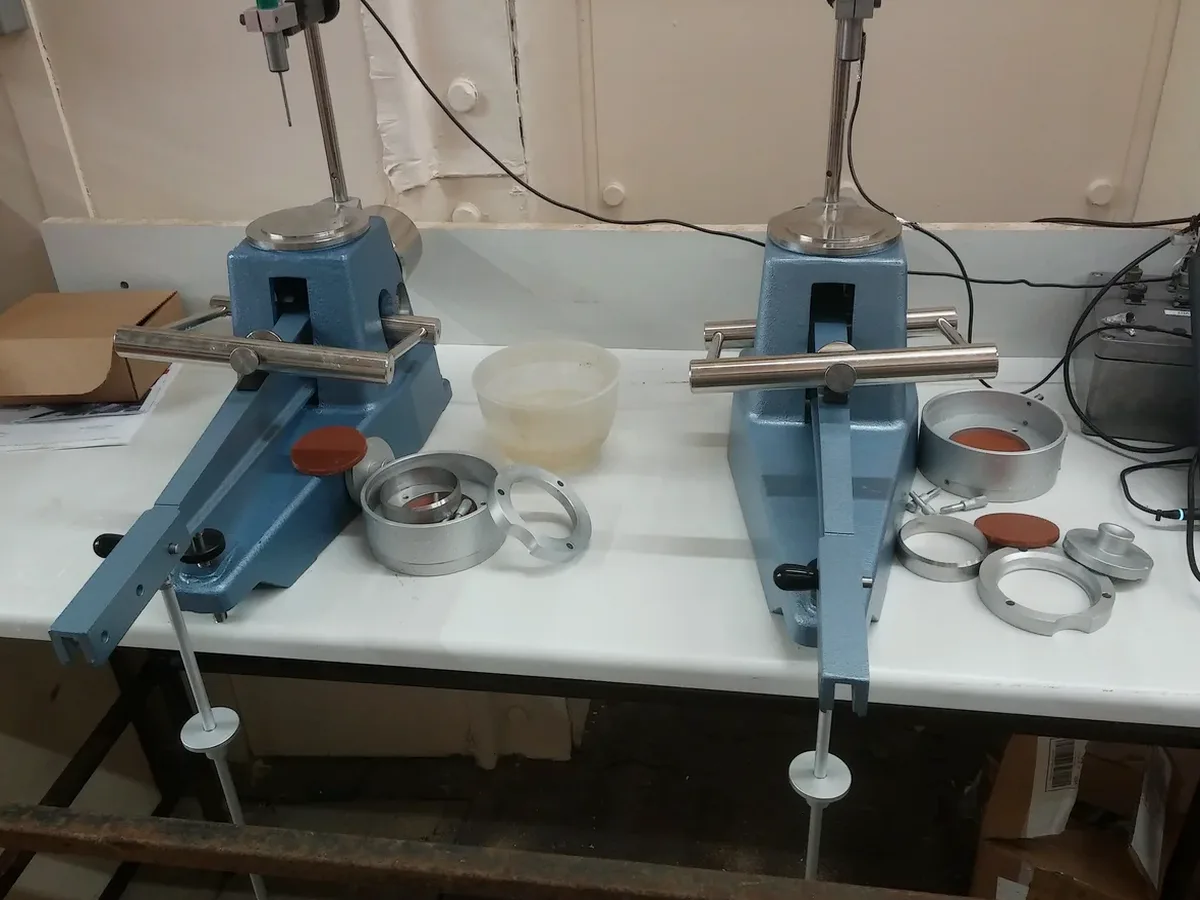
All laboratory procedures conducted in Allen County must conform to ASTM International standards, which are adopted by reference in the Indiana Building Code and enforced through local permitting authorities. Key methods include ASTM D422 for particle-size analysis, ASTM D4318 for Atterberg limits determination, ASTM D698 and D1557 for compaction testing, and ASTM D2435 for consolidation properties. Projects involving federal funding or INDOT oversight may additionally require AASHTO specifications, while environmental assessments follow EPA guidelines for contaminant testing. The Indiana Professional Engineers Act mandates that geotechnical reports be sealed by a licensed professional, ensuring that laboratory data is interpreted within the proper engineering context before informing design decisions.
The types of projects driving demand for laboratory solutions in Fort Wayne are diverse. Commercial developments along the Dupont Road corridor and near the airport require bearing capacity and settlement analyses supported by consolidation and shear strength tests. Residential subdivisions in areas like Aboite and St. Joseph Townships need expansive soil evaluation and compaction control data. Infrastructure improvements—including the ongoing riverfront development, stormwater management facilities, and INDOT highway widenings—demand comprehensive testing programs that often combine grain size analysis with hydrometer sedimentation to classify fine-grained materials and predict their behavior under saturated conditions. Even smaller projects like retaining walls or underground utility installations benefit from Atterberg limits testing to assess soil plasticity and potential for shrink-swell movement during freeze-thaw cycles.
Quick answers
What is the difference between geotechnical laboratory testing and field testing?
Field testing provides in-situ measurements of soil behavior under natural conditions—such as standard penetration tests or cone penetration tests—while laboratory testing examines disturbed or undisturbed samples under controlled conditions. Lab work allows precise determination of index properties, strength parameters, and consolidation characteristics that cannot be measured directly in the field. Both approaches are complementary, and a complete geotechnical investigation integrates data from both sources to develop a reliable site model.
How long does a typical laboratory testing program take to complete?
Turnaround time depends on the scope and complexity of the testing suite. Basic classification tests like moisture content and grain size analysis may be completed within three to five business days. Consolidation testing, which requires incremental loading over extended periods, can take one to two weeks. Triaxial shear tests and permeability determinations add additional time. Most laboratories supply expedited scheduling for time-sensitive projects when coordinated in advance.
Are laboratory tests required for all construction projects in Fort Wayne?
While not every minor project mandates a full laboratory program, any development requiring a building permit for foundations, retaining structures, or earthwork typically needs geotechnical data to satisfy the Indiana Building Code. Commercial and public works projects almost always require laboratory testing as part of the site investigation. Residential builders on sites with known problematic soils—such as expansive clays or fill materials—benefit significantly from laboratory analysis even when not strictly required.
What qualifications should I look for in a geotechnical laboratory?
Look for laboratories accredited through programs like AASHTO R18 or ISO/IEC 17025, which certify technical competence in specific test methods. Staff should include technicians certified by NICET or equivalent bodies. The lab should maintain calibrated equipment traceable to NIST standards and participate in proficiency sample programs. In Indiana, the professional engineer sealing the final report bears responsibility for laboratory data quality, so verify that the lab operates under the supervision of a licensed PE with geotechnical expertise.